
Cold Email
COLD EMAIL FOR CONTRACTORS

In short: Cold email works for contractors who sell to businesses. Email the person who signs the contract. Send from a second domain. Keep it short. Follow up a few times. Here’s how.
Cold email is an email to someone who doesn’t know you yet. It gets about 3,600 US Google searches a month. “How to get commercial cleaning contracts” gets 880. “Commercial cleaning leads” gets 390. So owners who sell to businesses want a way in. Most of them tried cold email once. They bought a list, sent it to everyone, and quit.
Does cold email work for contractors?
Yes, if you sell to other businesses. A commercial account is worth the work. One cleaning contract can last for years. One property manager can hand you every roof they run.
Cold email is what got Wicked Logistics a $1.2 million contract. It works when three things are right: the list, the inbox setup, and the email. Most people get all three wrong.
It isn’t for you if you sell to homeowners. Homeowners search for you when they need you. That’s a job for Google Ads and local SEO, not cold email.
Who should you email?
Email the person who signs the contract. Not the main company inbox. Not the front desk.
| You sell | Who signs |
|---|---|
| Commercial cleaning | Office manager or facilities manager |
| Commercial roofing | Property manager or building owner |
| HVAC service contracts | Facilities manager or property manager |
| Landscaping | Property manager or HOA manager |
| Freight and logistics | Shipping, operations or supply chain manager |
Pick a small group. “Office buildings within 20 miles” beats “every business in Texas.” The smaller the list, the more your email can fit them.
The best list is made of companies that are already looking for what you sell. That’s what Snitch finds. It shows you businesses and people who have been searching for your service, with real emails.
Protect your main email domain
Your domain is the name after the @ in your email. This step burns most contractors. They send a few hundred emails from their main business address. Then their domain gets flagged. Now their normal emails to normal customers land in junk.
Do it this way instead:
- Use a second domain to send. If your site is abcroofing.com, send from something like abcroofinghq.com. Your main domain never sends cold email.
- Set up SPF, DKIM and DMARC. These are settings that prove the email really came from you. Google requires SPF or DKIM from every sender, and DMARC from bulk senders.
- Warm up the inboxes. A new inbox starts slow. It sends a little more each day before a real campaign goes out.
- Send a few emails from each inbox. Spread the sending across a few inboxes. Don’t send them all from one.
- Watch for spam reports. Keep your spam rate under 0.1%. Never let it pass 0.3%. Check it in Google’s Postmaster Tools.
What to write
Keep it short. Make it about them. Ask for one thing. No links, no files, no company history.
Here’s an example:
Subject: Cleaning at the Mesa Street building
Hi Laura,
I saw that your company runs the office building on Mesa Street. We clean four office buildings on the west side. We clean at night and on weekends, so tenants never see us.
If your cleaner ever misses a night, would it help to have a quote on file?
Mike ABC Commercial Cleaning 123 Main St, El Paso, TX Reply “no thanks” and I won’t email again.
Look at what is in it:
- A real reason to write. It names the building.
- One line of proof. It says what you already do for buildings like theirs.
- A small ask. A quote on file, not a meeting.
- The must-haves. A real address and an easy way to opt out.
Change the details for each group you email. A property manager cares about tenant complaints. A facilities manager wants one company that always shows up.
Follow-ups
Most people send one email and quit. Send a few follow-ups over two weeks or so. Make each one shorter than the last. Add one small new thing each time, like a job you just did nearby or a quick question.
Stop as soon as someone replies or opts out. A reply is a lead. Answer it the same day, from a real person. The fastest answer wins the job. We wrote about that in lead response time.
Is cold email legal?
Yes. Follow the CAN-SPAM rules and you’re fine. They cover email to businesses too. Every cold email needs four things:
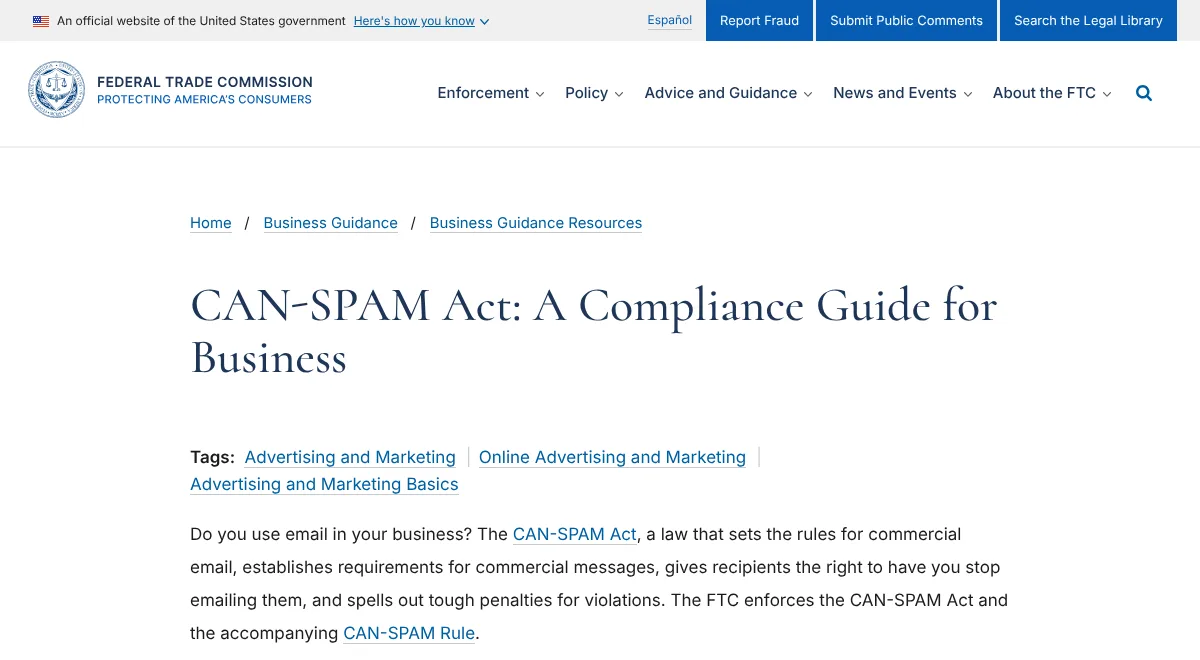
- Your real name in the “From” line, and a real “Reply-To” address.
- A subject line that matches what’s in the email.
- Your real street address or P.O. box.
- A clear way to opt out.
When someone opts out, stop emailing them. If you pay someone to send for you, hold them to the same CAN-SPAM rules.
What replies should you expect?
Fewer than you want at first. Cold email takes steady work on a small, well-picked list. Judge it by calls booked and contracts signed. Don’t judge it by how many people opened it. Open rates are a number that looks good and pays nothing.
If nobody replies, the list or the email is wrong. Fix the list first. A great email to the wrong people still gets nothing.
Do it yourself or hand it off
You can do all of this yourself. The inbox setup and warm-up come before the first real email goes out. The writing and the follow-ups take time every week.
If you would rather hand it off, our cold email service does the whole job. We build the list from Snitch and real business records. We set up second domains and new inboxes, and we warm them up. We write the emails, and you OK them. Then the people who want to talk come to you. It’s an add-on, and we quote it on its own.
YOU MAY LIKE THIS
 Cold Email Follow Up: When to Send It and What to Say (With Templates)Oct 26, 2026
 Answering Service for Plumbers and HVAC: Book the Emergency, Not the MessageNov 1, 2026
 Appointment Setting for Service Businesses: Book the Lead in 5 MinutesNov 1, 2026
Questions
Is cold email legal?
Will cold email hurt my business email?
Who should a contractor email?
How long should a cold email be?
How many follow-ups should I send?
Does Dead River run cold email for me?
Download your free book now
This $7 Million Marketing Playbook can get you more calls from the people already looking for you, in most cases WITHOUT spending another dollar on ads.