
Advice
HOW TO IDENTIFY ANONYMOUS WEBSITE VISITORS (AND WHAT YOU CAN DO WITH IT)
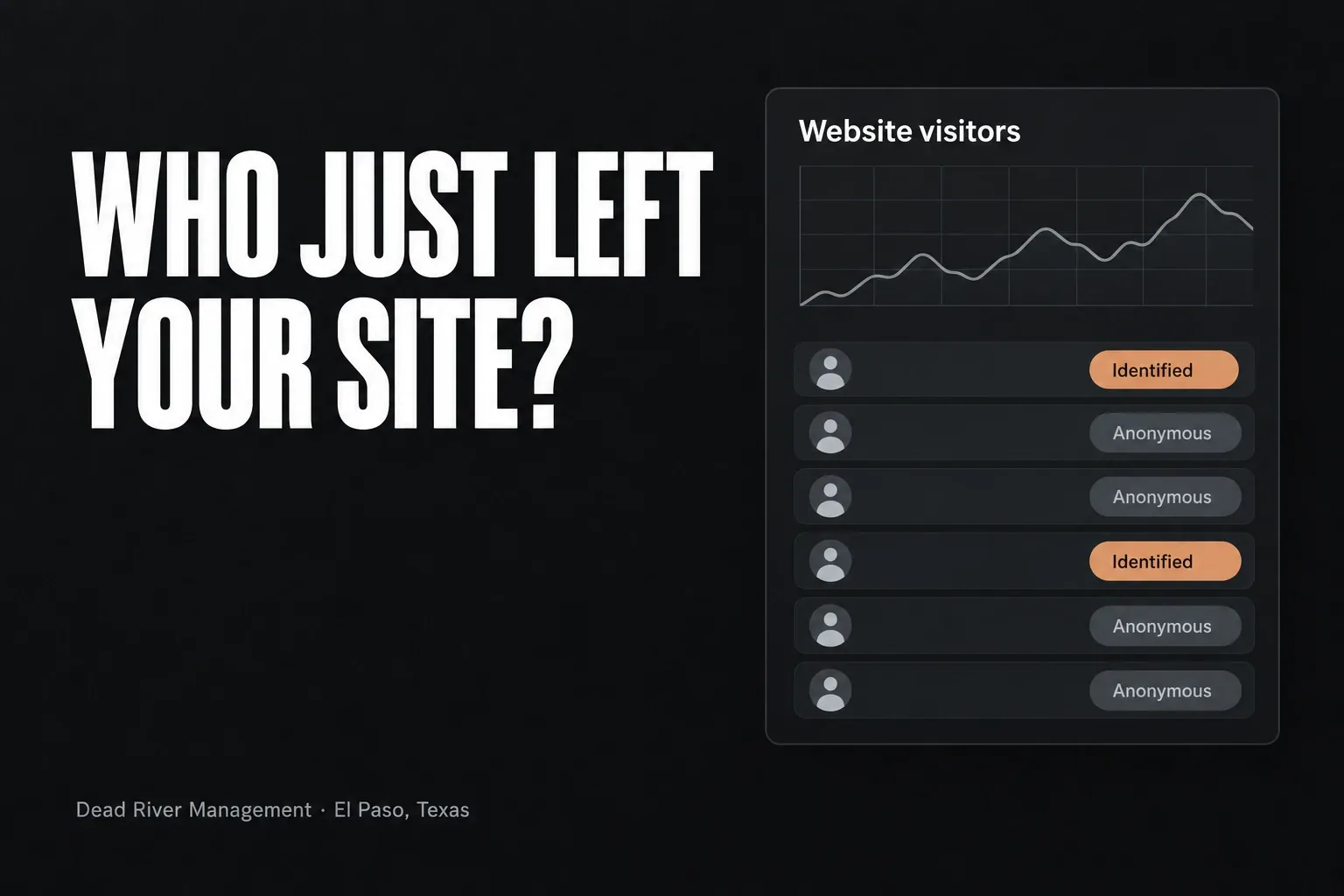
In short: Most people who visit your website leave without filling out a form or calling. Website visitor identification uses a small piece of code on your site to match some of those visitors to a person or company. It won’t catch everyone, and it doesn’t give you permission to call or text anyone. Used right, it helps you build better ad audiences and follow up smarter.
Here’s something that drives owners crazy once they see it. You look at your analytics and see hundreds of visits last month. Then you look at your inbox and see a handful of form fills. Everybody else looked, left, and you have no idea who they were.
Some of those people were ready to buy. They just weren’t ready to talk yet.
Why regular analytics can’t tell you who visited
Google Analytics and tools like it show you visits. How many people came, where they came from, what pages they looked at, how long they stayed. That’s useful. But it’s all in aggregate. It doesn’t show names.
That’s on purpose. Analytics tools are built to count visits, not identify people.
How website visitor identification works
There are two main kinds.
Company identification (B2B). When someone visits from a business network, the tool can sometimes tell which company it is. Useful if you sell to other businesses. You won’t know which person at the company, but you’ll know the company looked.
Person identification (B2C). A pixel on your site matches some visitors to available identity data, like a name, email or mailing address. Coverage depends on your traffic, where people are, what device they’re on, consent, and what data is out there.
Either way, the steps are about the same:
- Identify. Match some visitors to a person or company.
- Enrich. Add what’s available, like location or company size.
- Segment. Group them by what pages they looked at or how well they fit.
- Activate. Send approved audiences to your CRM or your ads.
What it can’t do
I want to be straight with you here, because a lot of companies selling this aren’t.
- It won’t identify every visitor. No honest provider will promise that. Some visitors will always stay anonymous.
- The data isn’t perfect. Some records will be incomplete or wrong.
- It’s not permission to contact someone. Identifying a visitor doesn’t mean you can call, text or cold email them. You still have to follow privacy and marketing rules.
If a company tells you it’ll name every single visitor and you can call them all tomorrow, walk away.
How to use it the right way
Here’s where visitor identification actually pays off.
- Better ad audiences. Show your Facebook and Google ads to people who already looked at your site, instead of everybody in town.
- Smarter priorities. See which companies or areas keep coming back to your pricing page, and focus your sales time there.
- Better mailers. Send postcards to people who showed interest instead of the whole zip code.
- Know what’s working. See which pages bring in the people who fit your business.
What you don’t do: dump the list into a dialer and start cold calling. That’s how you get in trouble, and it doesn’t work anyway.
How to get started
- Update your privacy policy so it covers visitor identification and how you use the data.
- Pick a tool that’s honest about coverage and rules. Ask what their match rate looks like for traffic like yours, not their best case.
- Add the pixel to your site.
- Decide what you’ll do with it before the data shows up. Ads? Mailers? Sales priorities?
- Check it monthly. Look at who’s coming back and which audiences are turning into customers.
If you’re comparing tools, I put together a guide on intent data providers and the questions to ask each one.
Website visitors vs people looking right now
Visitor identification tells you who came to your site. That’s a start. But plenty of people looking for what you sell never land on your site at all. They’re on your competitor’s site, or still searching.
That’s what buyer intent data is for. It finds the people in your market who are looking up what you sell right now, whether or not they’ve visited you.
How we handle it
Website visitor identification is built into Snitch, along with buyer intent data and audience building. Plans start at $397 a month, month to month, no setup fee. It’s for your ads, email and mail, not cold calls or texts. If you’d rather we run all of it for you, that’s what Demand Flow is.
We can do this for you
You can do everything above yourself. Most owners do not have the hours. Dead River Management builds and runs it for all kinds of businesses, from ecommerce brands to recruiting agencies to bakeries. We work in El Paso and across the country. You keep running jobs. We handle the demand, the follow-up, and the tracking. You judge us on booked jobs, not reports. See Snitch, read about The $100K Guarantee, or book a strategy call.
YOU MAY LIKE THIS
 Appointment Setting for Service Businesses: Book the Lead in 5 MinutesNov 1, 2026
 Generative Engine Optimization (GEO): How to Get Named in AI AnswersNov 1, 2026
 HVAC Lead Generation: Win the July Call and the Winter Slow SeasonNov 1, 2026
CASE STUDIES
BECOME OUR NEXT SUCCESS STORY

$100,000 IN NEW REVENUE IN 90 DAYS OR YOU DON'T PAY US.
Our team calls every lead within 5 minutes, follows up, books the appointment and rebooks no-shows. You show up and close the job.
Or skip the guarantee and pay $250 for every appointment we book.
WE LITERALLY WROTE THE BOOK ON…
HOW TO GET AS MANY CUSTOMERS AS YOU CAN POSSIBLY HANDLE
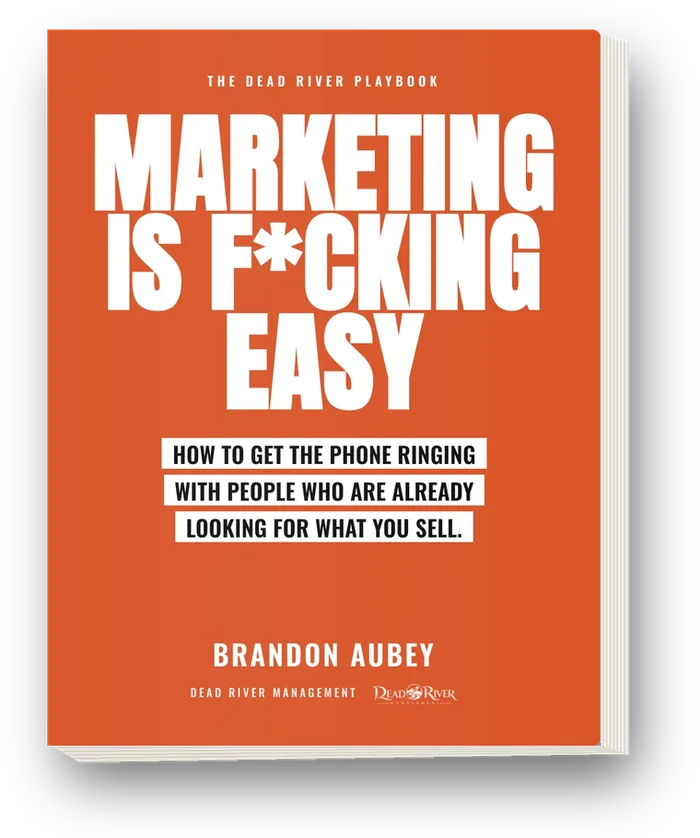
Marketing is F*cking Easy is the playbook we run inside Dead River, written so you can do it yourself. The system, the people already looking, the ads, and your first 90 days. 158 pages, no fluff, straight to what to do Monday morning.
Questions
Can you see who visits your website?
How do you identify anonymous website visitors?
Is website visitor identification legal?
Does it identify every visitor?
What's the difference between B2B and B2C visitor identification?
STILL SCROLLING? JUST HIT THE DAMN BUTTON.
People who are already looking. A phone that actually rings. A guarantee with your name on it.
Download your free book now
This $7 Million Marketing Playbook can get you more calls from the people already looking for you, in most cases WITHOUT spending another dollar on ads.